


Wildlife Welfare in the Crosshairs
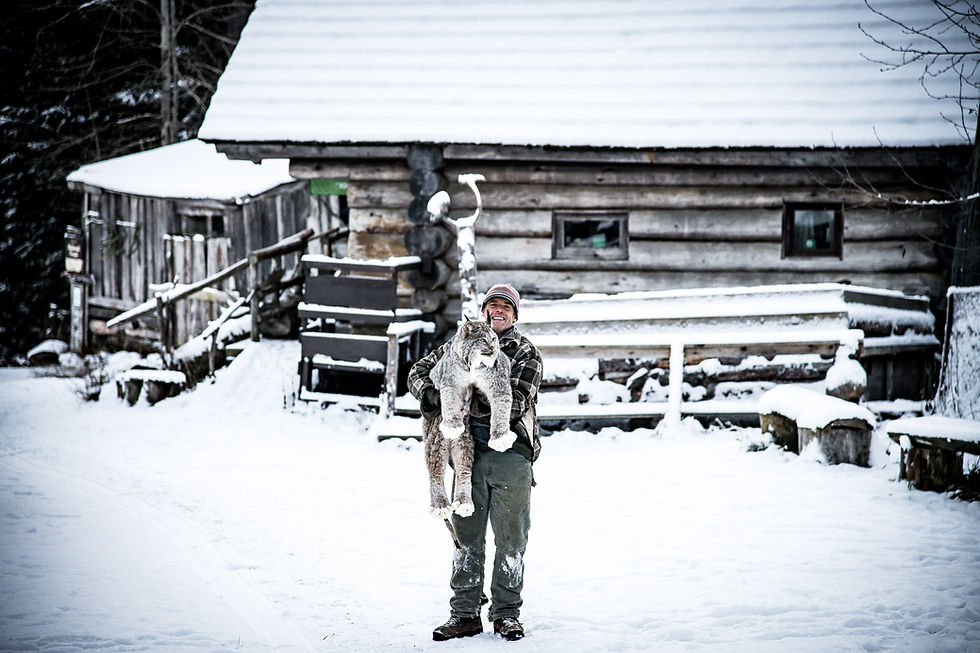
Some of you are aware of a story I've been covering for the last two years in Southeast Alaska. If you're not, it involves the rather eccentric owner of Kroschel's Wildlife Park in Haines, Alaska and the park's recent shut down and removal of animals by the Alaska Department of Fish and Game. Some animals didn't make it through the translocation: a wolf, a snowy owl, and a fox perished. Others were left behind. The ones who were able to be relocated are settling into approved facilities whose staff have dedicated their lives to providing a good life for any and all animals, regardless of their placement circumstances. I've visited Kroschel's place several times, have interviewed him and the state, and have enjoyed my encounters with the animals there, always with a bit of journalistic skepticism. As it was the most popular tour in Southeast Alaska for the last two decades, I reviewed and recommended it in Alaska Magazine, as did CondeNast Traveler, and other prominent travel media outlets. I have my opinions, which are still developing based on new information, but I've definitely wrestled with the accounts presented here and my obligation to include both sides. A few news outlets have posted the full 15-page document of the state's charges against Kroschel, with only a few quotes from Kroschel denying the allegations. In fairness, I'm including both unedited documents here: the full charging document from the state and the response to those charges in Kroschel's own words.
The reason I've been so obsessed with this story is that I hate seeing animals in captivity. They belong in the wild. That said, when I dig a little deeper, I add a few asterisks: Injured or orphaned animals should be rescued. Of course, I realize that isn't feasible. Hundreds of moose calves and bear cubs lose their moms to cars each year, and there aren't enough places to take all of them. Still, I know I couldn't just leave an animal on the side of the road without trying to save it. I also don't buy that animals in captivity can't survive back in the wild. Flaco the owl (Google him) figured out how to hunt, and I like to think that his one year of freedom was worth more to him than a lifetime spent in a cage. I also think it's unethical to breed animals in captivity...unless it involves an endangered species at risk of extinction, like the Northern white rhinos. Even on that, I vacillate. Finally, if animals are held captive, I believe they should live in large, natural enclosures that closely align with their native habitat (climate, soil, and vegetation), rather than in cages. As for "ambassador animals," who are kept at facilities in order to provide the general public with access to an animal they might never see in the wild (due to so many factors...geographic, socioeconomic) for education and conservation purposes, I do believe that there's undeniable impact. While it depends on the animal's circumstance, I'm not sure that the ends justify the means. All of it is very thorny, and I could go on and on. Instead, I'll open it up to you. What are your thoughts on the Kroschel case? On animals in captivity (rescues, sanctuaries, rehabs, zoos)? When you look at the charges against Kroschel, does it cause you to think about your own care toward animals? For example, I don't change my dog's water every single day, and our pets have certainly escaped our fencing more than once, despite our best efforts. I haven't washed our dog's bedding lately, though houseguests (okay, anyone with a sense of smell) know I should. Go to town on this. Make me think.


My first thought about sharing cultures through language learning is that the everyday experience deserves as much attention as the larger explanation. An everyday conversation can reveal cultural habits that a vocabulary list cannot explain. Seen this way, European cultural exchange becomes a topic to explore rather than something to sum up too quickly. I can imagine different answers depending on the situation, so I would want to understand the context before drawing conclusions. What kinds of shared activities make an exchange feel meaningful?
A conversation about planning the next step in graduate education seems most useful to me when it leaves space for uncertainty and further questions. A clear research interest can make a programme comparison more meaningful than a list of rankings. It makes me curious about the practical side of graduate study planning. I would probably come back to this question after trying to work through one concrete example rather than deciding immediately. What would help you decide whether a programme fits your learning goals?
There is something approachable about discussing discovering the cultural heritage of Lusatia through situations people can actually picture. Language and local stories can reveal connections that are easy to miss on a map. That is the kind of detail I would keep in mind while exploring Lusatian cultural heritage. A short discussion of an everyday example would make this easier for me to connect with, especially as someone still learning about the subject. How would you introduce regional heritage through a classroom project?
Considering learning local history through school projects, I keep coming back to the difference between knowing about an idea and putting it into practice. Family memories and public records can offer different perspectives on the same place. I would keep that thought nearby when looking for ideas about Przyglow history projects. I am still thinking through the details, and a small example would help me picture how this works in practice. How could students compare these sources while respecting what each can show?
What draws my attention to finding your way around Polish businesses is the possibility of making an unfamiliar subject feel closer to everyday life. Clear descriptions help readers distinguish what a business does from the language used to advertise it. It makes me curious about the practical side of Polish business information. I am more curious about the process than a polished result, because the steps in between are usually where questions appear. Which details matter most when comparing unfamiliar local businesses?